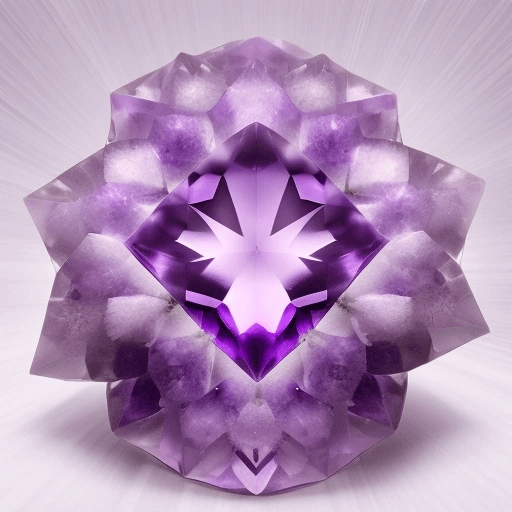
The Enduring Appeal of Amethyst: A Journey into Mental Wellness
In a world increasingly seeking holistic approaches to well-being, the allure of crystals as tools for healing and mental wellness has surged. Among these, Amethyst stands out, revered for its captivating violet hues and purported calming properties. But beyond its aesthetic appeal, what lies beneath the surface of this gemstone, and can it truly aid in reducing anxiety and depression? This article delves into the history, lore, and scientific understanding of Amethyst, exploring its potential benefits for mental wellness and providing practical guidance on incorporating it into your daily life.
The rising interest in crystal healing, particularly for mental health, reflects a broader cultural shift towards integrative medicine. Individuals are actively seeking complementary therapies to augment conventional treatments, driven by a desire for greater control over their well-being. Amethyst, with its association with stress reduction and enhanced intuition, aligns perfectly with this trend. Consider the example of support groups incorporating guided meditation with Amethyst stones, reporting a deepened sense of relaxation and emotional connection among participants.
This highlights the potential of Amethyst as a valuable adjunct in mental wellness practices, fostering a sense of inner peace and resilience. While scientific validation of crystal healing remains an ongoing area of exploration, the subjective experiences and testimonials of countless individuals cannot be dismissed. Many practitioners of crystal therapy emphasize Amethyst’s connection to the crown chakra, the energy center associated with spiritual awareness and enlightenment. By stimulating this chakra, Amethyst is believed to facilitate a deeper connection to one’s inner self and a greater sense of purpose, which can be particularly beneficial for those grappling with feelings of anxiety or depression.
For instance, some individuals find solace in holding an Amethyst during moments of panic, reporting a tangible sense of calm washing over them, allowing them to regain control and clarity. Furthermore, the power of intention and the placebo effect should not be underestimated in the context of crystal healing. When individuals consciously engage with Amethyst, believing in its potential to promote healing and well-being, they may be more likely to experience positive outcomes. This underscores the importance of approaching crystal therapy with an open mind and a willingness to harness the mind-body connection. Whether used as a focal point for meditation, a tangible reminder of one’s intentions, or simply as a source of aesthetic pleasure, Amethyst can serve as a powerful tool for self-care and mental wellness, empowering individuals to take an active role in their own healing journey.
A Historical Tapestry: Amethyst Through the Ages
Amethyst’s history is as rich and vibrant as its color, a testament to its enduring appeal across cultures and epochs. From ancient Egypt, where it was meticulously carved into amulets and jewelry—often associated with protection and status—to ancient Greece, where it was believed to prevent intoxication (the word ‘amethystos’ means ‘non-intoxicated’ in Greek), this crystal has been prized for millennia for both its aesthetic beauty and perceived metaphysical properties. The Greeks believed that drinking from amethyst goblets would ward off drunkenness, reflecting an early understanding, albeit symbolic, of its potential to promote balance and clear-headedness – concepts central to mental wellness.
This association highlights an early cultural recognition of the crystal’s potential influence on mental states, aligning with modern interests in crystal therapy for anxiety and stress reduction. In the Middle Ages, Amethyst transcended its earlier associations to become a symbol of royalty and the church, adorning the rings of bishops as a representation of piety and the crowns of kings as an emblem of power and divine right. This elevation to sacred and royal status further solidified its reputation as a stone of wisdom, spiritual insight, and emotional stability.
The use of Amethyst in religious artifacts and royal regalia underscored its perceived ability to facilitate connection with the divine and promote inner peace, qualities highly valued in the pursuit of mental and spiritual well-being. This historical context provides a rich backdrop for understanding its continued use in spiritual practices today. Beyond its symbolic roles, Amethyst was also historically employed in various medicinal practices. Ancient Roman physicians, for instance, used Amethyst to treat skin conditions and promote healing, showcasing an early belief in its therapeutic capabilities.
In traditional Chinese medicine, Amethyst was sometimes ground into powders and ingested or applied topically for its purported detoxifying and calming effects. While these historical uses may not align with modern scientific understanding, they illustrate a long-standing cultural perception of Amethyst as a stone capable of influencing physical and mental health. This historical perspective adds depth to the contemporary exploration of Amethyst benefits in alternative medicine and crystal healing, particularly in the context of mental wellness and spiritual growth.
The Metaphysical Properties: Calming the Mind, Uplifting the Spirit
Proponents of crystal healing attribute a range of metaphysical properties to Amethyst, positioning it as a valuable tool for mental wellness. Foremost among these is its association with promoting calmness and reducing stress, a quality particularly appealing in our increasingly frenetic modern lives. Advocates suggest that holding Amethyst, meditating with it, or even simply keeping it in one’s environment can create a sense of tranquility, acting as a buffer against daily anxieties. This resonates with the principles of alternative medicine, which often emphasizes the importance of creating a supportive environment for healing.
Furthermore, Amethyst is believed to enhance spiritual awareness, encouraging introspection and a deeper understanding of oneself, aligning with the growing interest in mindfulness and spiritual growth within the health and wellness community. Central to Amethyst’s purported metaphysical properties is its connection to the crown chakra, the energy center located at the top of the head, believed to govern consciousness and spiritual connection. Crystal therapy practitioners suggest that Amethyst can stimulate this chakra, facilitating a connection to higher consciousness, intuition, and a sense of universal understanding.
This stimulation is thought to open pathways for spiritual growth and enhance one’s ability to access inner wisdom. From a mental health perspective, this can translate to improved self-awareness and a greater sense of purpose, contributing to overall emotional well-being. The concept of chakra healing, while not scientifically proven, is a cornerstone of many alternative healing modalities and resonates with those seeking a holistic approach to mental and emotional balance. For those specifically struggling with anxiety and depression, Amethyst is often recommended as a complementary therapy.
It is said to soothe the mind, promoting relaxation and a sense of peace, which can be particularly beneficial during moments of panic or heightened stress. In cases of depression, it is thought to uplift the spirit and encourage emotional balance, helping to dispel feelings of sadness and hopelessness. While scientific evidence supporting these claims remains limited, the subjective experiences of many individuals suggest that working with Amethyst can provide a sense of comfort and support. Consider, for instance, incorporating Amethyst into a nightly meditation routine or placing it on your nightstand to promote restful sleep. Such practices, combined with conventional treatments, may contribute to a more comprehensive approach to managing mental health challenges. Moreover, the ritualistic aspect of crystal therapy, like holding and focusing on the amethyst, may provide a sense of control and agency, which is particularly important for those grappling with anxiety and depression.
Geological Origins: A Crystal Forged by Time and Pressure
Amethyst, a silicate mineral and celebrated variety of quartz, embarks on a geological journey spanning millions of years, solidifying within the cavities of volcanic rocks and the hollow interiors of geodes. The captivating purple hue, a hallmark of Amethyst, is a testament to the Earth’s artistry, arising from trace amounts of iron and other minerals intricately woven into the crystal lattice during its formation. Natural irradiation acts as the catalyst, transforming these elements and birthing the spectrum of violet shades that define this gemstone.
The intensity of the color, ranging from the soft whisper of pale lavender to the commanding depth of deep violet, serves as a geological fingerprint, reflecting the unique environmental conditions present during its genesis. Understanding this origin story provides a richer appreciation for Amethyst’s inherent connection to the earth and its potential as a grounding tool for mental wellness. The geographical tapestry of Amethyst is as diverse as its coloration, with notable mining locations scattered across the globe, each imbuing the crystal with distinct characteristics.
Brazil and Uruguay, renowned for their vast Amethyst geodes, yield specimens with vibrant color saturation and impressive size, often sought after for creating statement pieces and enhancing living spaces with their calming energy. Zambia, in contrast, produces Amethyst crystals with a more intense, almost smoky purple, prized for their clarity and use in delicate jewelry designed to promote emotional balance. Russia, historically a significant source, is known for Amethyst exhibiting reddish undertones, highly valued by collectors and those seeking to deepen their spiritual growth through crystal therapy.
These variations highlight how geological origins influence the metaphysical properties attributed to Amethyst, further enriching its appeal within alternative medicine and spiritual practices. From a mental wellness perspective, understanding Amethyst’s formation deepens our appreciation for its grounding energy. The slow, deliberate process of crystal formation mirrors the journey of personal growth and healing. Just as Amethyst requires specific conditions to develop its vibrant color, individuals seeking mental clarity and emotional stability must cultivate supportive environments for themselves.
The presence of iron, essential to Amethyst’s purple hue, can be seen as symbolic of the strength and resilience needed to overcome challenges related to anxiety and depression. By connecting with the geological origins of Amethyst, individuals may find a tangible connection to the Earth’s natural healing processes, fostering a sense of stability and inner peace that complements practices like meditation and chakra healing. This geological understanding enhances the crystal’s perceived benefits, aligning it with the broader goals of holistic health and spiritual well-being.
Varieties and Grades: From Deep Russian to Brazilian Amethyst
Amethyst, a cornerstone in crystal healing practices, presents itself in a spectrum of varieties and grades, each subtly different in its energetic signature and aesthetic appeal. The value of a particular Amethyst specimen is often determined by the intensity and evenness of its color, its clarity, and its origin. Deep Russian Amethyst, once sourced from Russia but now exceedingly rare, remains the gold standard, coveted for its profound purple saturation and exceptional transparency. Siberian Amethyst shares this intense coloration, often exhibiting captivating reddish flashes under specific lighting, further enhancing its desirability among collectors and those seeking powerful crystals for mental wellness.
These deeper hues are often associated with a stronger connection to the third eye and crown chakras, believed to enhance intuition and spiritual insight, making them particularly appealing for those on a path of spiritual growth. Uruguayan Amethyst, frequently found lining the insides of geodes, offers a different, yet equally compelling, visual experience. These geodes showcase dense clusters of vibrant purple crystals, creating a breathtaking display of nature’s artistry. While the individual crystals may be smaller than those found in other varieties, the sheer abundance and collective energy within a geode can be particularly potent for creating a calming atmosphere and promoting emotional balance.
Brazilian Amethyst, perhaps the most readily accessible variety, typically presents with a lighter lavender hue. While it may lack the intensity of the Russian or Siberian varieties, its accessibility and gentler energy make it an excellent choice for beginners exploring crystal therapy or for those seeking a subtle, yet supportive, aid in managing anxiety and promoting relaxation. Beyond geographical classifications, Amethyst is also graded based on clarity and cut, factors that significantly influence its energetic projection and aesthetic value.
A well-cut Amethyst, regardless of its origin, will maximize light refraction, amplifying its inherent beauty and, according to crystal healing practitioners, its therapeutic properties. Inclusions, or internal imperfections, can sometimes be seen as detracting from value, but some believe they add character and uniqueness to the crystal, imbuing it with a specific energetic fingerprint. Ultimately, the ‘best’ Amethyst is subjective, depending on individual preferences, intended use, and resonance. Whether seeking a powerful tool for chakra healing, a beautiful piece for meditation, or a gentle companion for everyday stress relief, understanding the nuances of Amethyst varieties empowers individuals to make informed choices that align with their personal needs and intentions for mental wellness.
Incorporating Amethyst into Daily Life: Practical Applications
Amethyst, with its soothing violet hues, offers a versatile toolkit for integrating crystal healing into the rhythms of daily life, potentially fostering mental wellness. Donning Amethyst jewelry, whether it be a delicate necklace resting near the heart chakra or a bracelet gracing the wrist, provides a constant, subtle connection to the crystal’s purported calming energy. Advocates of crystal therapy suggest that this sustained contact can gently mitigate anxiety throughout the day. For instance, a healthcare professional experiencing workplace stress might find solace in wearing an Amethyst pendant, serving as a tangible reminder to pause, breathe, and reconnect with a sense of inner peace amidst the demands of their profession.
Similarly, placing Amethyst clusters or geodes strategically within your living space or workspace transforms the environment into a sanctuary of tranquility, subtly influencing the atmosphere and promoting relaxation. Delving deeper into meditative practices, holding an Amethyst crystal during meditation sessions can amplify relaxation and facilitate a more profound spiritual connection. The crystal’s metaphysical properties are believed to resonate with the crown chakra, the energy center associated with higher consciousness and spiritual awareness. By focusing on the Amethyst’s energy, individuals may find it easier to quiet the incessant chatter of the mind, allowing for a deeper state of meditative absorption.
Some practitioners of chakra healing even recommend placing an Amethyst directly on the forehead, between the eyebrows (the third eye chakra), to enhance intuition and promote clarity of thought. This practice can be particularly beneficial for those seeking guidance or struggling with indecision, helping them to tap into their inner wisdom and make more aligned choices. Furthermore, the practice of placing an Amethyst crystal beneath your pillow while sleeping is a time-honored tradition believed to encourage restful sleep and ward off nightmares.
Proponents suggest that the crystal’s calming vibrations can help to soothe the mind and create a more peaceful sleep environment, particularly beneficial for individuals grappling with insomnia or anxiety-related sleep disturbances. Beyond these established practices, exploring novel ways to incorporate Amethyst into your routine can lead to personalized discoveries. Consider creating an Amethyst-infused elixir by placing a cleansed crystal in a pitcher of water (indirect method) and allowing it to sit overnight, imbuing the water with its energetic properties. This water can then be sipped throughout the day as a gentle reminder to stay grounded and connected to your intentions for mental wellness. Ultimately, the key lies in experimenting with different methods and observing what resonates most profoundly with your individual needs and preferences, allowing you to harness the amethyst benefits for spiritual growth.
Caring for Your Amethyst: Cleansing and Maintenance
To ensure your Amethyst crystals remain vibrant and energetically potent, consistent cleansing and mindful maintenance are paramount. Cleansing rituals serve not only to remove physical dust and debris but also to clear any accumulated negative energies that the crystal may have absorbed from its environment or interactions. Several methods can be employed: a gentle rinse under cool, running water is a simple yet effective starting point, visualizing any stagnant energy washing away. Smudging with sage or palo santo, allowing the smoke to envelop the Amethyst, is another popular technique, drawing upon ancient traditions of purification.
Alternatively, harnessing the energy of the sun or moon – placing the Amethyst in sunlight (for a limited time) or, preferably, under the soft glow of moonlight for a few hours – can revitalize its metaphysical properties. These practices, deeply rooted in crystal therapy, contribute significantly to the crystal’s ongoing effectiveness in promoting mental wellness and spiritual growth. While sunlight can be beneficial, prolonged exposure to direct sunlight should be avoided, as it can cause the Amethyst’s color to fade over time, diminishing its aesthetic appeal and potentially affecting its energetic resonance.
This is particularly true for deeply colored varieties like Deep Russian or Uruguayan Amethyst. When not in use, store your Amethyst in a soft cloth bag or a dedicated pouch to protect it from scratches and physical damage. Consider storing it with other crystals known for their protective qualities, such as clear quartz or black tourmaline, to further safeguard its energy. For those using Amethyst for chakra healing, particularly to stimulate the crown chakra and enhance spiritual awareness, maintaining the crystal’s integrity is crucial for optimal results.
Beyond cleansing and proper storage, consider the environment in which you place your Amethyst. Avoid exposing it to harsh chemicals or extreme temperatures, as these can compromise its structure and appearance. If you are using Amethyst as part of your mental wellness routine, for example, placing it near your bed to promote restful sleep or carrying it with you to alleviate anxiety, be mindful of its surroundings. Regularly check your Amethyst for any signs of damage, such as chips or cracks, and address them promptly.
Some crystal practitioners believe that damaged crystals may still hold value but may require additional cleansing and intention-setting. By diligently caring for your Amethyst, you not only preserve its beauty but also honor its potential benefits for years to come, enhancing its role as a supportive tool in your journey toward emotional balance and spiritual growth. Regularly engaging with your Amethyst through meditation or focused intention can further amplify its positive effects, solidifying its place as a cherished companion on your path to well-being.
Conclusion: Embracing Amethyst as a Tool for Well-being
While scientific research on the efficacy of crystal healing remains limited, the placebo effect, a well-documented phenomenon in health and wellness, and the power of belief should not be discounted. The act of consciously choosing a tool like Amethyst, imbued with intention, can be a powerful catalyst for positive change. For many, Amethyst serves as a tangible reminder of their intention to cultivate calmness, reduce stress, and promote emotional well-being. This intention-setting, a cornerstone of many spiritual practices, can help individuals become more mindful of their thoughts and feelings, fostering a greater sense of self-awareness and control over their emotional state.
Consider, for example, someone using Amethyst during meditation to focus on releasing anxious thoughts; the crystal becomes a focal point, aiding in concentration and promoting a deeper sense of relaxation. Whether you are drawn to its historical significance, metaphysical properties rooted in ancient traditions, or simply its aesthetic beauty, Amethyst can be a valuable tool in your journey towards mental wellness, offering a sense of peace and connection in an increasingly chaotic world. Crystal therapy, as a complementary approach, often emphasizes the importance of self-care and creating a supportive environment.
The use of Amethyst, whether through wearing jewelry, placing it in your environment, or incorporating it into meditation practices, can be seen as an act of self-compassion, signaling a commitment to prioritizing your mental and emotional health. This proactive engagement can be particularly beneficial for individuals seeking to manage anxiety or mild symptoms of depression, providing a sense of agency and empowerment in their healing process. Furthermore, the purported metaphysical properties of Amethyst, particularly its association with the crown chakra and spiritual growth, resonate with individuals seeking a deeper sense of purpose and connection.
Advocates of chakra healing believe that Amethyst can help to clear blockages in the crown chakra, facilitating a greater sense of spiritual awareness and intuition. While these beliefs are not scientifically proven, they can provide a framework for personal exploration and self-discovery. For instance, someone struggling with feelings of disconnection or lack of purpose might find solace in the idea that Amethyst can help them tap into their inner wisdom and connect with something larger than themselves.
This sense of connection, whether to a higher power, the universe, or simply to one’s own inner self, can be profoundly beneficial for mental well-being. As with any complementary therapy, including other alternative medicine approaches, it is essential to consult with a qualified healthcare professional for any mental health concerns. Crystal healing should not be considered a replacement for conventional medical treatment, but rather as a supportive tool that can be integrated into a holistic approach to well-being. Open communication with your healthcare provider is crucial to ensure that you receive the most appropriate and effective care for your individual needs. By combining the potential benefits of Amethyst with evidence-based therapies, individuals can create a comprehensive and personalized plan for achieving optimal mental and emotional health.