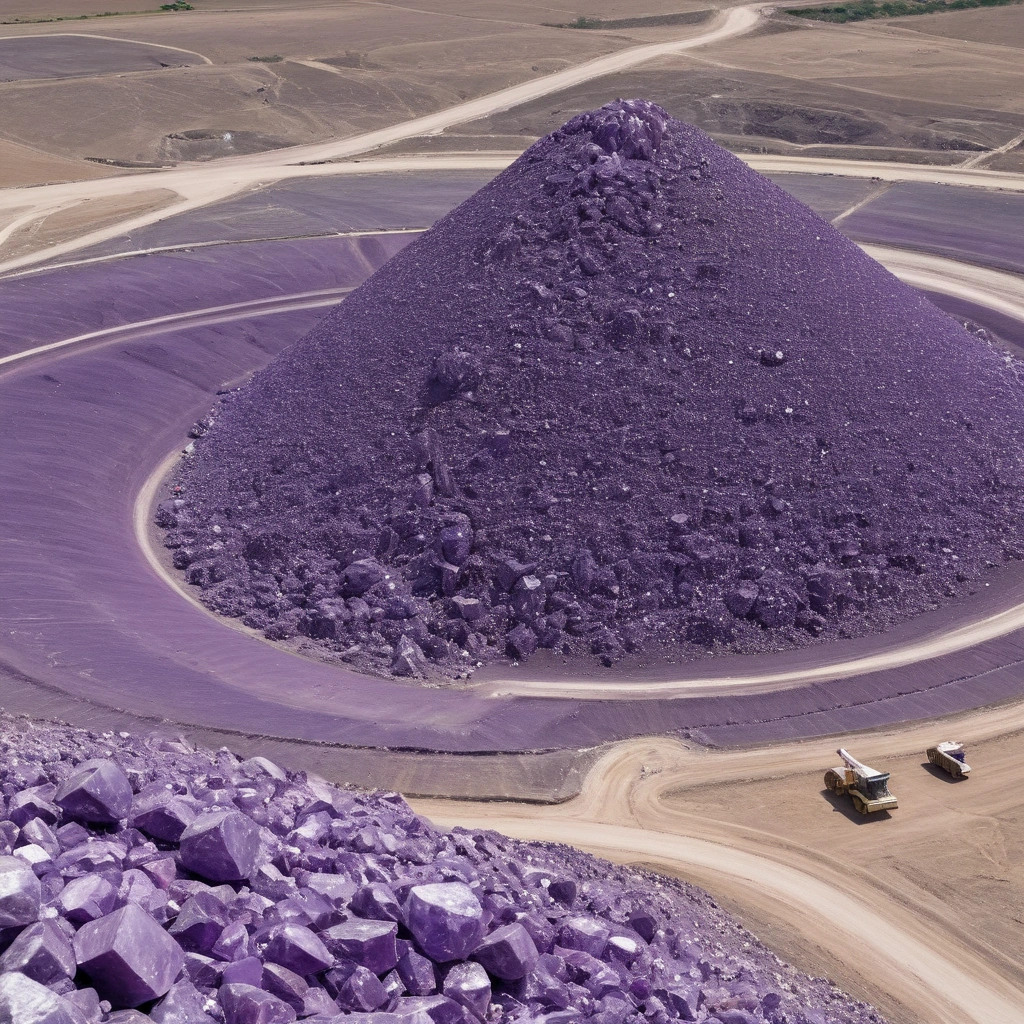
The global distribution of amethyst deposits reflects diverse geological settings and formation processes, with production concentrated in specific regions offering unique qualities and characteristics. Understanding these deposits provides insight into market dynamics, quality variations, and future availability of this beloved gemstone.
Brazil dominates world amethyst production, accounting for approximately 60-70% of global supply. The Rio Grande do Sul state hosts the most significant deposits within the Paraná Basin flood basalts. These 130-million-year-old volcanic flows contain countless amethyst-bearing geodes formed during cooling and degassing. The Alto Uruguai district alone encompasses over 300 registered mines, producing material ranging from pale lavender to deep purple. Individual geodes can weigh several tons, with the largest discovered specimen exceeding 13 tons, now displayed in the Smithsonian Museum.
The Artigas region of northern Uruguay shares the same geological formation as southern Brazil, producing exceptional deep purple amethyst with superior transparency. Uruguayan material commands premium prices due to intense color saturation and minimal color zoning. The smaller production volume, approximately 5-10% of Brazilian output, contributes to higher values. Mining operations here tend toward smaller, family-run enterprises using traditional extraction methods that minimize crystal damage.
Zambia emerged as a significant producer in the 1970s with the discovery of the Kariba deposit near Lake Kariba. These metamorphic-hosted deposits yield distinctively colored amethyst with red and blue color flashes. Annual production reaches 700-1,000 tons of rough material, with approximately 10% suitable for faceting. The Mwakambiko and Mapatizya mines produce exceptional specimens rivaling historical Siberian quality. Political stability and improved infrastructure have enhanced Zambia’s position in international markets.
Other notable deposits contribute specialized material to global markets. The Four Peaks mine in Arizona produces amethyst with unique reddish overtones, highly valued in American markets. South Korean deposits near Jeongseon yield distinctive chevron amethyst with dramatic purple and white banding. Mexican deposits, particularly in Vera Cruz and Guerrero states, produce exceptional phantom amethyst and unique crystal habits. Each source contributes distinct characteristics valued by different market segments.
Mining Techniques and Extraction Methods
Amethyst extraction methods vary dramatically based on deposit type, local regulations, and economic factors. Understanding these techniques reveals the challenges and environmental considerations involved in bringing these gems from earth to market.
Open-pit mining dominates Brazilian operations where weathering has exposed basalt flows containing geodes. Excavators remove overburden to expose mineralized zones, identified by experienced miners recognizing subtle geological indicators. The “garimpo” system involves independent miners working claims with basic equipment. Miners use specialized long-handled hammers to carefully crack geodes, preserving crystal faces. This artisanal approach, while labor-intensive, minimizes damage compared to mechanized extraction. Daily production varies from a few kilograms to several hundred kilograms depending on deposit richness.
Underground mining becomes necessary when deposits extend below economically viable open-pit depths. The Montezuma mine in Minas Gerais exemplifies modern underground amethyst mining, with decline access reaching 200 meters depth. Room-and-pillar methods extract ore while maintaining stability through strategic pillar placement. Controlled blasting using low-velocity explosives minimizes crystal damage. Underground operations require ventilation systems, ground support, and dewatering infrastructure, significantly increasing operational costs but accessing higher-quality material protected from surface weathering.
Hydraulic mining, controversial due to environmental impacts, efficiently processes large volumes of weathered material. High-pressure water jets disaggregate decomposed basalt, washing amethyst geodes from host rock. Settling ponds capture sediment while allowing water recycling. While productive, this method faces increasing restrictions due to erosion, sedimentation, and water quality concerns. Modern operations incorporate sediment control and revegetation programs to minimize environmental impact.
Alluvial mining recovers amethyst crystals weathered from primary deposits and concentrated in river gravels. Simple hand tools and sieves separate crystals from sediment, requiring minimal investment. Madagascar’s Ankazobe region exemplifies alluvial amethyst recovery, where seasonal rains expose new material. Production remains small-scale but provides important income for rural communities. Alluvial crystals often display superior clarity due to natural selection during transport, though surface abrasion reduces size.
Processing and Beneficiation
Raw amethyst undergoes various processing stages transforming rough crystals into market-ready products. These processes add significant value while requiring specialized knowledge and equipment.
Initial sorting separates material by quality, size, and intended use. Experienced sorters evaluate color intensity, clarity, crystal termination, and damage. Top-grade faceting rough commands prices 50-100 times higher than decorative specimens. Sorting criteria include:
- Extra grade: Intense uniform color, eye-clean, undamaged terminations
- Grade A: Good color, minor inclusions, suitable for calibrated cuts
- Grade B: Moderate color, visible inclusions, commercial jewelry
- Grade C: Pale color or heavily included, beads and carvings
- Specimen grade: Aesthetic crystal groups for collectors
- Decorative: Geode sections, bookends, and ornamental pieces
Cleaning removes adhering matrix and surface contamination. Initial washing uses high-pressure water to remove clay and loose material. Stubborn iron oxide staining requires chemical treatment with oxalic acid or commercial rust removers. Ultrasonic cleaning in heated detergent solutions removes organic contamination. Some operations use hydrofluoric acid to remove silica overgrowths, though safety concerns limit this practice. Proper cleaning can dramatically improve appearance and value, particularly for specimen-grade material.
Heat treatment lightens overly dark material or converts amethyst to citrine or prasiolite. Precise temperature control determines outcomes:
- 300-400°C: Lightens dark amethyst to preferred medium purple
- 450-500°C: Produces golden citrine from iron-rich amethyst
- 500-550°C: Creates yellow-green prasiolite from specific deposits
- 600°C+: Complete decolorization to colorless quartz
Treatment detection remains challenging, as properly executed heating mimics natural processes. Microscopic examination reveals intact color zoning in natural stones versus diffuse color in heated material. Professional treatment facilities use computer-controlled furnaces with precise temperature ramping to prevent thermal shock fracturing.
Economic Factors and Market Dynamics
The amethyst market exhibits complex dynamics influenced by fashion trends, economic conditions, and cultural preferences. Understanding these factors helps predict price movements and market opportunities.
Production costs vary significantly between regions and mining methods. Brazilian open-pit operations achieve lowest unit costs through economies of scale, producing amethyst at $0.50-2.00 per kilogram for commercial grade. Underground mining increases costs to $5-20 per kilogram due to infrastructure requirements. Artisanal mining in Africa involves minimal capital investment but higher labor costs, resulting in production costs of $3-10 per kilogram. These cost structures influence global pricing and market positioning.
Quality-based pricing creates dramatic value differences within the amethyst market. Commercial-grade material for mass-market jewelry trades at $1-5 per carat for calibrated stones. Fine-quality faceted amethyst reaches $20-50 per carat for exceptional color and clarity. Rare collector specimens, particularly unique formations or exceptional crystals, command prices exceeding $1,000 per piece. The logarithmic price progression with quality creates opportunities for value addition through careful selection and processing.
Regional market preferences drive demand patterns and pricing. Asian markets, particularly China and India, prefer deeper purple colors with red overtones, driving demand for Zambian and Uruguayan material. North American consumers favor medium purple with even color distribution, supporting Brazilian production. European markets show preference for larger stones with subtle color, influencing cutting styles and rough selection. These preferences create arbitrage opportunities for international traders.
Seasonal demand fluctuations affect pricing and production planning. February birthstone promotions drive first-quarter demand, while holiday jewelry sales peak in the fourth quarter. Chinese New Year creates significant demand spikes for purple gems considered auspicious. Understanding these cycles enables strategic inventory management and pricing optimization. Miners often stockpile production during low-demand periods for release during peak seasons.
Environmental and Social Considerations
Modern amethyst mining increasingly addresses environmental protection and social responsibility, responding to consumer awareness and regulatory requirements. Sustainable practices ensure long-term industry viability while supporting local communities.
Environmental management in amethyst mining focuses on minimizing ecosystem disruption and ensuring post-mining restoration. Best practices include:
- Topsoil preservation for use in revegetation
- Sediment control preventing waterway contamination
- Progressive rehabilitation returning mined areas to productive use
- Water recycling reducing consumption and discharge
- Waste rock management preventing acid mine drainage
- Biodiversity conservation protecting endemic species
Leading operations obtain environmental certifications demonstrating commitment to sustainable practices. The Brazilian Cooperative of Amethyst Miners implemented watershed protection programs preserving water quality for downstream communities. Zambian mines participate in regional conservation initiatives protecting wildlife corridors. These efforts enhance social license to operate while potentially commanding premium prices from environmentally conscious consumers.
Social responsibility initiatives ensure mining benefits local communities beyond employment. Education programs train local workers in gemology and value-added processing, increasing income potential. Healthcare initiatives provide medical services in remote mining areas. Infrastructure development, including roads and electricity, benefits entire communities. Fair trade certification programs guarantee minimum prices and working conditions, though implementation remains limited in the gemstone sector compared to other commodities.
Artisanal and small-scale mining (ASM) produces approximately 20% of global amethyst supply while supporting millions of livelihoods. These operations face challenges including:
- Limited access to capital and technology
- Informal market structures reducing profit margins
- Safety hazards from inadequate equipment and training
- Environmental degradation from uncontrolled operations
- Child labor in family mining operations
Development organizations work with ASM communities providing training, equipment, and market access. Formalization programs bring miners into legal frameworks, improving working conditions and environmental practices. Direct trade relationships between ASM cooperatives and international buyers eliminate intermediaries, increasing miner income. These initiatives recognize ASM’s important role while addressing associated challenges.