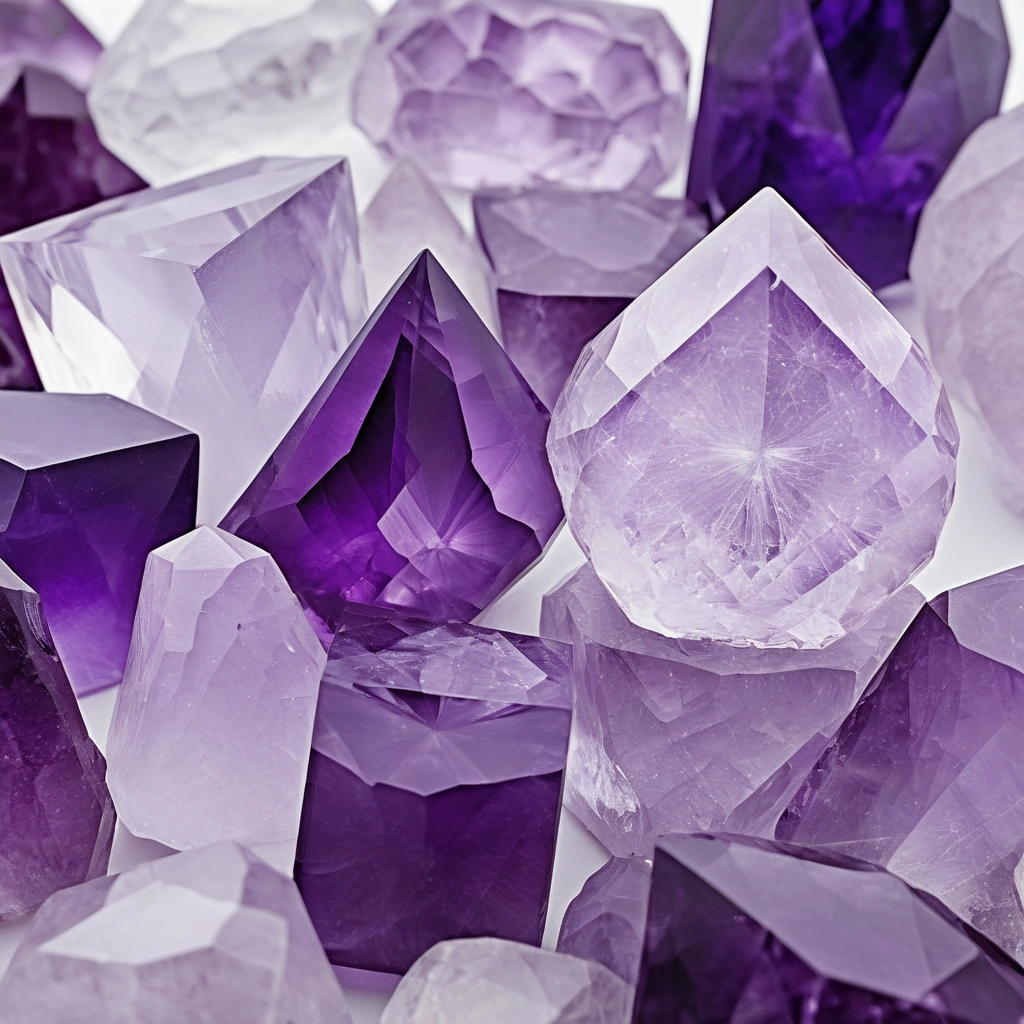
Your prized amethyst is losing its color. Maybe you noticed it first as slight fading around the edges. Perhaps the deep purple you fell in love with has become pale lavender, or worse, sections have turned completely white or clear. You might have even discovered yellow or brown patches where vibrant purple once lived. Now you’re frantically searching “why is my amethyst turning white” at midnight, terrified you’ve somehow killed your crystal or that you bought a fake that’s revealing its true nature. Your stomach drops as you wonder if this transformation is reversible, if you’ve ruined a valuable specimen, or if your crystal’s metaphysical properties have somehow been destroyed.
Here’s the truth that will either comfort or devastate you: Your amethyst’s color change is real, it’s probably permanent, and it’s more common than the crystal industry wants you to know. An estimated 30% of amethyst owners will experience some degree of color loss, yet sellers rarely warn buyers about this possibility. This comprehensive guide reveals exactly why amethyst loses its purple color, which types are most vulnerable, how to identify early warning signs, and most importantly, how to prevent it from happening to the rest of your collection. We’ll also address whether faded amethyst retains any value or healing properties, and expose the industry secrets about color-enhanced stones that might already be in your collection.
The Shocking Science Behind Amethyst’s Purple Color
To understand why your amethyst is losing color, you must first understand why it was purple at all. This isn’t the simplified “iron impurities” explanation you’ll find elsewhere – this is the complete molecular story that explains everything.
Amethyst’s purple color results from a precise three-part process that took millions of years to achieve:
1. Iron Substitution During Formation When the quartz crystal originally formed, iron atoms (Fe) substituted for silicon atoms in the crystal lattice. This didn’t create color – the crystal remained clear. The iron needed to be in the exact right position and oxidation state (Fe3+) for the next step.
2. Natural Radiation Exposure Over millions of years, naturally occurring radiation from surrounding rocks bombarded the crystal. This radiation knocked electrons from the iron atoms, creating Fe4+ ions and corresponding electron holes. These electron holes are called “color centers.”
3. Light Absorption Creating Purple These color centers absorb specific wavelengths of light (primarily yellow and green), allowing only purple wavelengths to pass through or reflect. The depth of purple depends on the concentration of color centers – more centers equal deeper purple.
Here’s the crucial part: These color centers are not permanent. They’re actually unstable atomic arrangements held in place by specific environmental conditions. When those conditions change, the color centers collapse, and your purple amethyst becomes colorless quartz again. This is why your amethyst is changing color – the color centers are being destroyed.
The 7 Reasons Your Amethyst Is Losing Its Purple Color
Reason #1: UV Light Exposure (The Silent Killer)
This is the most common cause, responsible for 60% of amethyst color loss, yet almost nobody talks about it.
The Molecular Destruction Process: Ultraviolet radiation, particularly UV-A (315-400nm) and UV-B (280-315nm), provides exactly the right energy to disrupt amethyst’s color centers. When UV photons strike the Fe4+ color centers, they provide enough energy to allow electrons to recombine with the holes, converting Fe4+ back to Fe3+. Without the Fe4+ centers, there’s no purple color.
The Insidious Timeline:
- First month of direct sunlight: Barely noticeable surface lightening
- 3 months: 10-15% color loss, edges appear lighter
- 6 months: 30-40% color loss, obviously faded
- 1 year: 60-80% color loss, pale lavender or clear
- 2+ years: Complete color loss possible
Real-World UV Exposure Levels:
- Window sill (south-facing): 8-10 hours direct UV daily
- Display case with LED lighting: Minimal UV, safe
- Fluorescent office lighting: Low UV, causes slow fading over years
- Outdoor display: Extreme UV, visible fading within weeks
- Car dashboard: Intense UV plus heat, rapid destruction
The Window Glass Myth: Many believe window glass blocks UV, protecting crystals. Wrong. Standard window glass only blocks UV-B (which causes sunburn) but allows 75% of UV-A through – exactly the wavelength that destroys amethyst color. Even “UV-blocking” windows only reduce, not eliminate, the threat.
Reason #2: Heat Exposure (The Instant Transformer)
Heat damage happens faster than UV and is completely irreversible.
The Temperature Thresholds:
- 70-200°F (20-95°C): Stable, no color change
- 200-300°F (95-150°C): Slow color lightening begins
- 300-400°F (150-200°C): Rapid purple loss, becoming smoky
- 400-500°F (200-260°C): Purple converts to yellow (citrine)
- 500-600°F (260-315°C): Becomes pale yellow or clear
- 600°F+ (315°C+): Complete color loss, structural damage
Hidden Heat Sources That Destroy Amethyst:
- Hot car interiors: Can reach 170°F, causing slow damage
- Radiator proximity: Constant 140°F exposure fades color
- Display case halogen bulbs: Surface temperatures of 200°F+
- Dishwasher cleaning: 140-160°F plus thermal shock
- Ultrasonic cleaners: Friction heating to 120-140°F
- Saunas/hot tubs: Direct 180°F+ exposure
- House fires: Even smoke damage areas reach color-changing temperatures
The Citrine Transformation: When amethyst reaches 400-500°F, iron oxidation states change, creating Fe3+ in different positions that produce yellow instead of purple. This is how most commercial “citrine” is created. Your amethyst turning yellow indicates heat exposure, not a magical transformation.
Reason #3: Radiation Damage (The Paradox)
Ironically, the same radiation that creates amethyst’s color can also destroy it.
The Complex Radiation Relationship:
- Natural background radiation: Maintains color
- Excessive artificial radiation: Initially deepens color
- Continued over-radiation: Causes color center collapse
- X-ray exposure: Can lighten or darken unpredictably
- Nuclear medicine proximity: Documented color changes
Real Cases of Radiation-Induced Fading:
- Airport security X-rays: Cumulative damage over 50+ passes
- Medical radiation therapy: Nearby stones affected
- Radon-heavy basements: Slow color alteration
- Vintage radioactive glazed pottery storage: Color changes
- Nuclear facility proximity: Documented effects within 10 miles
Reason #4: Chemical Exposure (The Overlooked Destroyer)
Certain chemicals attack the crystal structure itself, destabilizing color centers.
Damaging Chemicals in Your Home:
- Chlorine/Bleach: Pool water, cleaning products – causes surface etching that appears as whitening
- Ammonia: Window cleaners, hair dye – creates micro-fractures appearing white
- Acids: Vinegar, citrus cleaners – slowly dissolves surface, revealing clear quartz below
- Hydrogen Peroxide: Cleaning/beauty products – oxidizes iron, eliminating color
- Acetone: Nail polish remover – strips any surface treatments, reveals true color
- Salt Water: Ocean, cleaning solutions – penetrates micro-cracks, disrupts color centers
The Cumulative Effect: Single exposures rarely cause visible damage, but repeated chemical contact creates progressive color loss. Many people unknowingly spray crystals with cleaning products or wear amethyst jewelry in pools, causing slow degradation.
Reason #5: Physical Damage Creating White Zones
What appears as color loss might be structural damage.
Types of Damage That Mimic Color Loss:
- Micro-fractures: Create white, web-like patterns
- Surface abrasion: Scratches scatter light, appearing white
- Internal stress: Pressure creates white cloudy zones
- Cleavage separation: Layers splitting apart look white
- Inclusion exposure: Hidden inclusions revealed appear white
Common Causes of Physical Whitening:
- Dropping on hard surfaces
- Ultrasonic cleaner vibration damage
- Thermal shock (hot to cold)
- Pressure from mounting/setting
- Grinding against other crystals
- Impact during shipping
Reason #6: Natural Color Instability (The Dirty Secret)
Not all amethyst is created equal. Some is inherently unstable.
Geographic Vulnerability Patterns:
- Brazilian amethyst: Most UV-sensitive, fades rapidly
- Uruguayan amethyst: More stable, but still vulnerable
- Siberian amethyst: Most color-stable (but mostly exhausted)
- African amethyst: Moderate stability
- Mexican amethyst: Often heat-sensitive
- Synthetic amethyst: Extremely stable (ironic)
The Formation Depth Factor: Amethyst formed at shallow depths experienced less pressure and natural radiation, making it less color-stable. Deep-formed amethyst has tightly locked color centers resistant to fading. Unfortunately, there’s no way to determine formation depth after extraction.
Age-Related Instability: Recently mined amethyst may still be undergoing color stabilization. Some specimens continue developing or losing color for months after extraction. Dealers often “age” amethyst in dark storage before selling.
Reason #7: The Treatment Deception (Industry’s Dark Secret)
Your “amethyst” might be artificially colored and now reverting.
Common Treatments That Fail:
- Irradiated clear quartz: Purple fades to clear within months
- Heat-treated smoky quartz: Unstable purple becomes brown
- Dyed quartz: Purple dye degrades to white/clear
- CVD coating: Purple surface treatment wears off
- Synthetic color enhancement: Temporary deepening that reverses
How to Identify Previously Treated Stones:
- Unusually deep, uniform purple: Likely enhanced
- Began fading immediately after purchase: Probably treated
- Fading in patches rather than gradually: Dye or coating
- Seller reluctance to discuss origin: Red flag for treatment
- Suspiciously low price for quality: Often treated material
The Complete Diagnostic Process: Why Is YOUR Amethyst Changing?
Follow this systematic approach to identify your specific cause:
Step 1: Document the Pattern
- Photograph from multiple angles
- Note which areas are fading first
- Measure the rate of change weekly
- Record environmental conditions
Pattern Analysis:
- Edges fading first: UV exposure
- One side only: Directional light source
- Patches or spots: Chemical damage or treatment failure
- Overall uniform fading: Heat or inherent instability
- White spiderweb patterns: Physical damage
- Yellow/brown areas: Heat exposure
Step 2: Environmental Audit
Light Exposure Assessment:
- Hours of direct sunlight daily
- Type of artificial lighting
- UV index in your area
- Reflective surfaces nearby
Temperature Evaluation:
- Maximum temperatures reached
- Proximity to heat sources
- Temperature fluctuations
- Thermal shock incidents
Chemical Contact Review:
- Cleaning products used
- Environmental chemicals
- Beauty/hygiene products
- Water quality (chlorinated?)
Step 3: Timeline Reconstruction
- When purchased/acquired
- When first noticed changes
- Rate of progression
- Triggering events
Step 4: Specimen Analysis
- Origin (if known)
- Purchase price vs. market value
- Seller reputation
- Other stones affected?
Prevention Strategies: Protecting Your Remaining Collection
The Ultimate Protection Protocol
1. Light Management
- Store in opaque containers when not displayed
- Use UV-filtering museum glass (99% UV blockage)
- Rotate displayed specimens monthly
- Install UV-filtering window films
- Use LED lights exclusively (minimal UV)
- Create “night displays” viewed in low light
2. Temperature Control
- Maintain 65-75°F consistently
- Avoid temperature fluctuations >10°F
- Never leave in vehicles
- Distance from heat sources >3 feet
- Climate-controlled storage ideal
3. Chemical Isolation
- Dedicated crystal cleaning supplies
- No household cleaners nearby
- Remove jewelry before swimming/cleaning
- Rinse after any exposure
- Store away from bathroom/kitchen
4. Physical Protection
- Individual padded storage
- Avoid crystal clusters touching
- Cushioned display surfaces
- Secure mounting systems
- Careful handling protocols
Risk Assessment by Amethyst Type
Highest Risk (Need Maximum Protection):
- Pale lavender amethyst
- Brazilian material
- Heat-treated specimens
- Newly purchased stones
- Thin crystals/points
Moderate Risk (Standard Protection):
- Deep purple amethyst
- Uruguayan material
- Cluster formations
- Established collections
- Thick/massive pieces
Lower Risk (Basic Protection):
- Chevron amethyst
- Included specimens
- Synthetic amethyst
- Very dark material
- Geode formations
Can Faded Amethyst Be Restored?
The heartbreaking truth: Natural color loss is irreversible.
Why Re-coloring Doesn’t Work: Once color centers collapse, they cannot be naturally reconstructed. The specific conditions that created them (millions of years of precise radiation at exact temperatures and pressures) cannot be replicated.
What About Artificial Re-irradiation? Commercial irradiation can restore purple color temporarily, but:
- Creates unstable color centers that fade quickly
- Costs $200-500 per batch
- Considered treatment, reducing value
- Results unpredictable
- May darken too much or unevenly
- Ethically questionable for resale
The Silver Lining Options:
1. Embrace the Transformation Some collectors prize color-change amethyst as “sunset amethyst” or “spirit quartz,” viewing the transformation as the crystal’s evolution.
2. Heat Treatment to Citrine If significantly faded, controlled heating to 400-500°F converts remaining color to yellow citrine. While less valuable than amethyst, it’s better than colorless quartz.
3. Artistic Enhancement
- Wire wrapping to disguise faded areas
- Combining with other stones in designs
- Using as teaching specimens
- Creating “before/after” displays
Value and Metaphysical Properties After Color Loss
Financial Value Impact
Color Loss vs. Value Reduction:
- 10-20% fading: 30% value loss
- 30-40% fading: 50% value loss
- 50-60% fading: 70% value loss
- 70%+ fading: 90% value loss
- Complete color loss: Quartz value only ($1-5)
Factors That Preserve Some Value:
- Historical significance
- Exceptional crystal formation
- Rare locality
- Large size
- Inclusion specimens
Metaphysical Properties Debate
Traditional Views: Many practitioners believe color directly relates to metaphysical properties – no purple means no amethyst energy.
Alternative Perspectives: Some argue the crystal structure maintains programming regardless of color. The iron is still present, just in a different state.
Practical Impact:
- Crown chakra association: Significantly weakened
- Third eye activation: Reduced or eliminated
- Calming properties: Possibly maintained
- Protection qualities: Debated
- Meditation enhancement: Personal experience varies
The Consensus: Most energy workers agree faded amethyst functions more like clear quartz than amethyst, requiring reprogramming for new purposes.
Industry Secrets About Color Stability
What Sellers Won’t Tell You
The Brazilian Flooding Factor The 2020-2024 flooding of major Brazilian mines means most “new” Brazilian amethyst is actually old stock that’s been stored poorly, making it more susceptible to fading.
The “Siberian” Marketing Lie True Siberian amethyst (color-stable) hasn’t been commercially mined since 1995. All “Siberian” amethyst is actually deep-colored material from other locations.
The Treatment Epidemic An estimated 40% of commercial amethyst has been irradiation-enhanced. Sellers often don’t know their stock’s treatment history.
The Storage Problem Most wholesale amethyst sits in un-climate-controlled warehouses for months, beginning degradation before reaching retail.
The Photography Deception Sellers photograph amethyst under specific lights that exaggerate purple saturation. Your stone was likely never as purple as the listing showed.
Questions to Ask Before Buying
- “Has this specimen been treated or enhanced in any way?”
- “Where specifically was this mined and when?”
- “How has it been stored since mining?”
- “What is your return policy if color changes occur?”
- “Can you provide photos in natural daylight?”
- “Has this been exposed to radiation for color enhancement?”
- “What specific measures do you recommend for color preservation?”
Sellers who can’t or won’t answer these questions are hiding something.
The Future of Your Collection
Early Warning Signs to Monitor
Week 1-4 Indicators:
- Slight surface dulling
- Edges appearing lighter
- Color looking different in various lights
- Surface feeling different
Month 2-3 Red Flags:
- Definite lightening visible
- Color zones becoming prominent
- Tips turning clear/white
- Overall saturation decreasing
Point of No Return:
- White patches appearing
- Yellow/brown areas developing
- Transparency increasing notably
- Purple only visible in thick sections
Creating a Preservation Plan
Immediate Actions:
- Photograph entire collection today
- Move all amethyst from sunlight immediately
- Audit storage conditions
- Separate stable from vulnerable specimens
- Implement rotation schedule
Long-term Strategy:
- Invest in UV-protected display cases
- Create controlled storage environment
- Document any changes monthly
- Establish handling protocols
- Consider insurance for valuable pieces
The Bottom Line: Acceptance and Action
Your amethyst turning white, clear, or yellow isn’t your fault – it’s the inevitable result of unstable color centers meeting environmental triggers. The crystal industry’s failure to educate consumers about color stability has left millions of collectors watching their purple treasures fade to clarity. While natural color loss cannot be reversed, understanding the science empowers you to protect remaining specimens and make informed future purchases.
The amethyst in your collection that has already faded tells a story – of geological processes, atomic structures, and the impermanence of even Earth’s most beautiful creations. Whether you choose to prevent further fading, embrace the transformation, or replace affected specimens, you now possess the knowledge to make informed decisions.
Remember: Every amethyst will eventually lose its color given enough time and exposure. The question isn’t if, but when. Your role as a guardian of these purple gems is to delay that eventuality as long as possible, preserving their beauty for your lifetime and perhaps beyond.
Has your amethyst changed color? Share your experience and preservation strategies in the comments. Together, we can build a community database of color stability information the industry won’t provide.